
35%
Energy saved vs. fixed-speed operation
24/7
Autonomous operation, no manual input
5s
AI response time to sensor change
0
Manual interventions required per shift
The Problem
Manual Control Is Costing You Daily
Fixed schedules and manual fan switches were designed for static environments. Real facilities are anything but static.
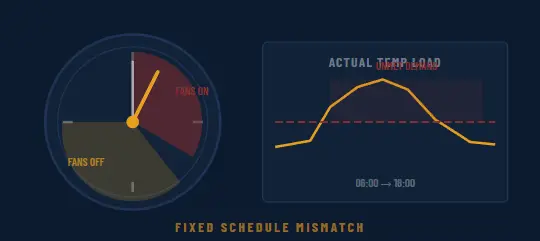
Fixed Schedules Miss Real Demand
Fans run on a timer regardless of actual temperature, occupancy, or production load. Peak heat zones go unaddressed. Off-peak hours waste energy running at full speed.
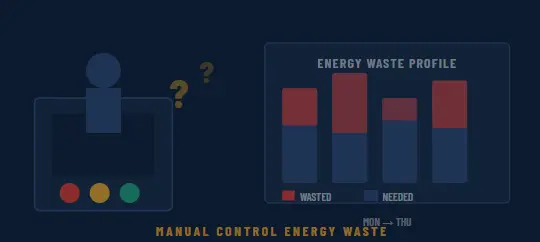
Manual Operation Wastes 35%
Operators adjust fans based on comfort perception, not data. The result is over-running in low-load periods and under-running during heat spikes—wasting 30–40% of fan energy daily.
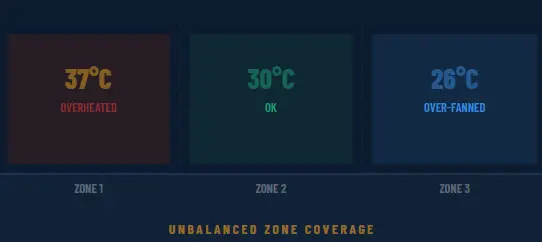
No Zone Differentiation
A single fan speed for the entire facility cannot address uneven heat loads. Hot zones near machinery stay uncomfortable while cool zones waste energy running at unnecessary speed.
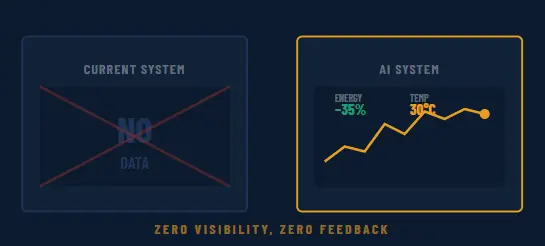
No Data, No Feedback Loop
Without sensors and analytics, there is no way to know if the ventilation system is working. Problems compound undetected: hot spots, inefficiency, and equipment strain go unresolved for weeks.
The Intelligence Layer
What a Smart Ventilation System Does
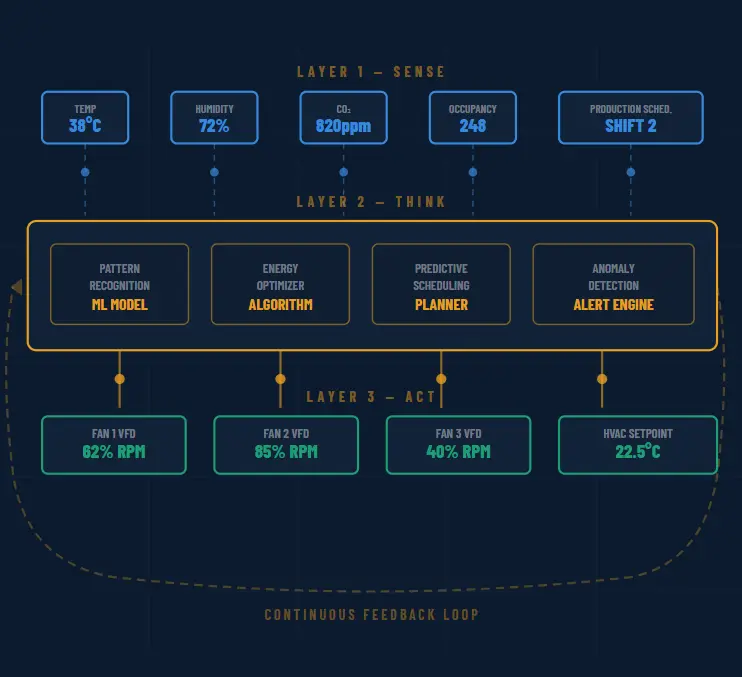
Three integrated layers turn a fan into a self-managing climate system.
Layer 01 — Sense
Real-Time Sensor Mesh
Temperature, humidity, CO₂, occupancy, and production schedule sensors feed continuous data into the AI engine—every 5 seconds.
Layer 02 — Think
AI Decision Engine
Machine learning models identify patterns, predict demand 30 minutes ahead, and calculate the optimal RPM for each fan in real time.
Layer 03 — Act
VFD & BMS Actuation
Instructions are sent via Modbus/BACnet to each fan’s VFD. Every fan runs at precisely the speed required—no more, no less. HVAC setpoints adjust automatically in parallel.
How It Adapts
5-Second Response Cycle
From sensor reading to fan speed adjustment—in 5 seconds, automatically.
1
Sensor Reads
IoT sensors capture temperature, occupancy, and CO₂ every 5 seconds across all zones.
2
Data Sent to AI
All sensor readings are streamed to the central AI engine via Modbus/RS485 protocol.
3
AI Calculates
ML model evaluates patterns and predicts the optimal RPM for each fan zone to balance comfort and energy.
4
VFD Sets Speed
The command is sent to each fan’s VFD drive. Fan RPM adjusts within 2 seconds to the calculated target.
5
System Learns
Outcome data feeds back into the model. Each cycle, predictions improve. Each week, energy savings compound.
Energy Performance
What the Numbers Look Like
Measured outcomes from AI-integrated HVLS deployments across industrial and commercial facilities.
35%
Fan energy reduction vs. fixed-speed baseline
18mo
Typical full system payback period including sensors
8°C
Average hot-spot reduction in monitored zones
99.2%
System uptime, AI-managed vs. 94% manual average
Energy Performance
What the Numbers Look Like
Measured outcomes from AI-integrated HVLS deployments across industrial and commercial facilities.
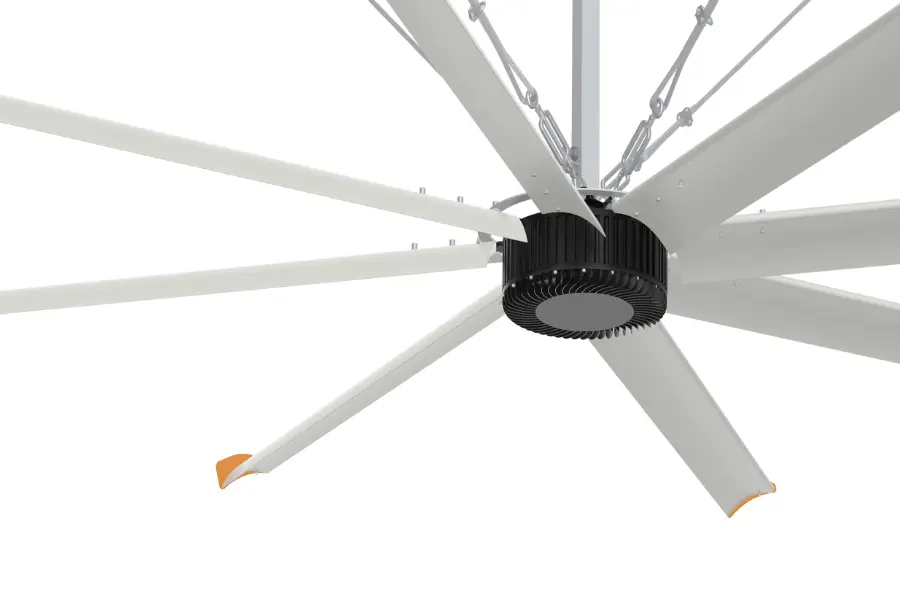
IP55 · BACnet Integration
HERO-8 ADF Series
6-blade HVLS with BACnet/IP and Modbus TCP for seamless BMS and AI integration.
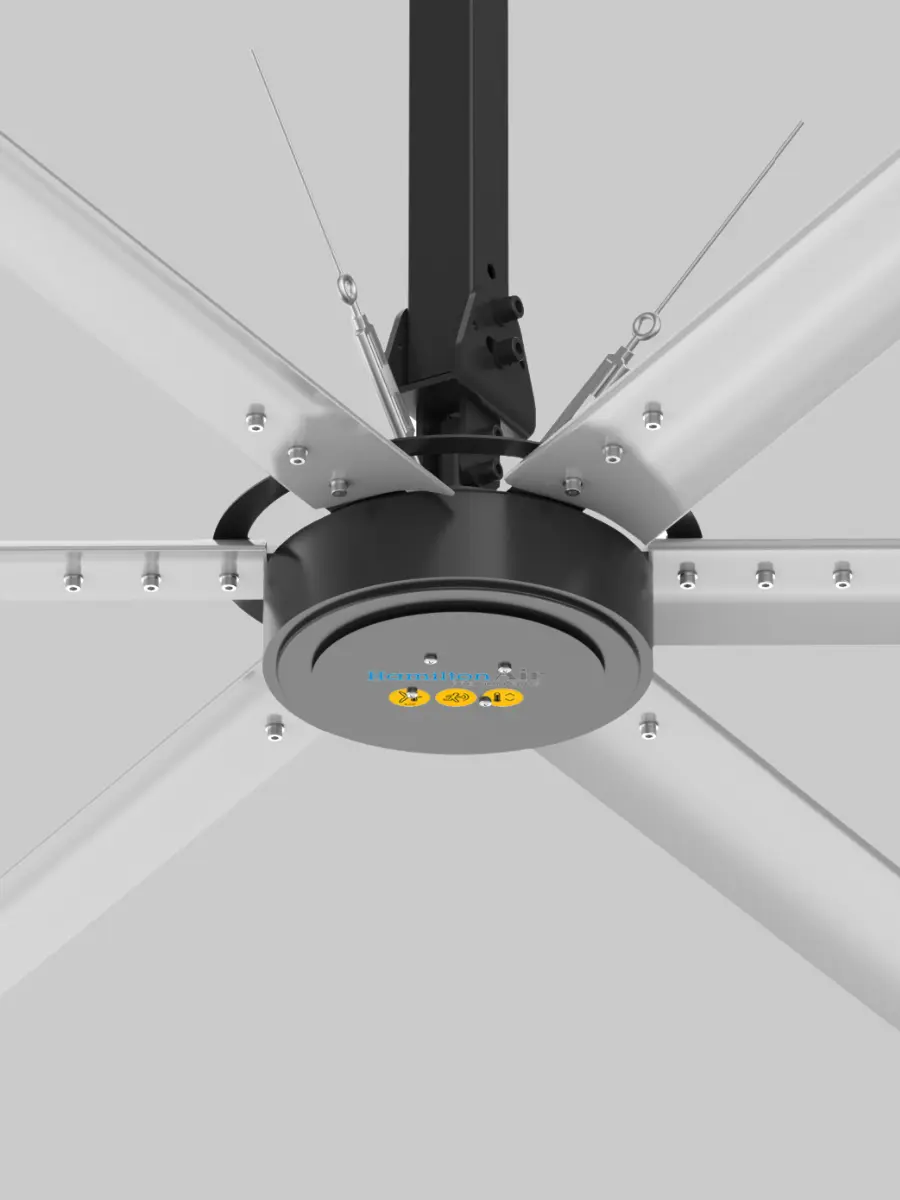
IP65 · Smart-Ready HVLS
HERO-6 V380e
Full VFD control, IP65 protection, and Modbus/RS485 connectivity for AI-enabled warehouses and factories.
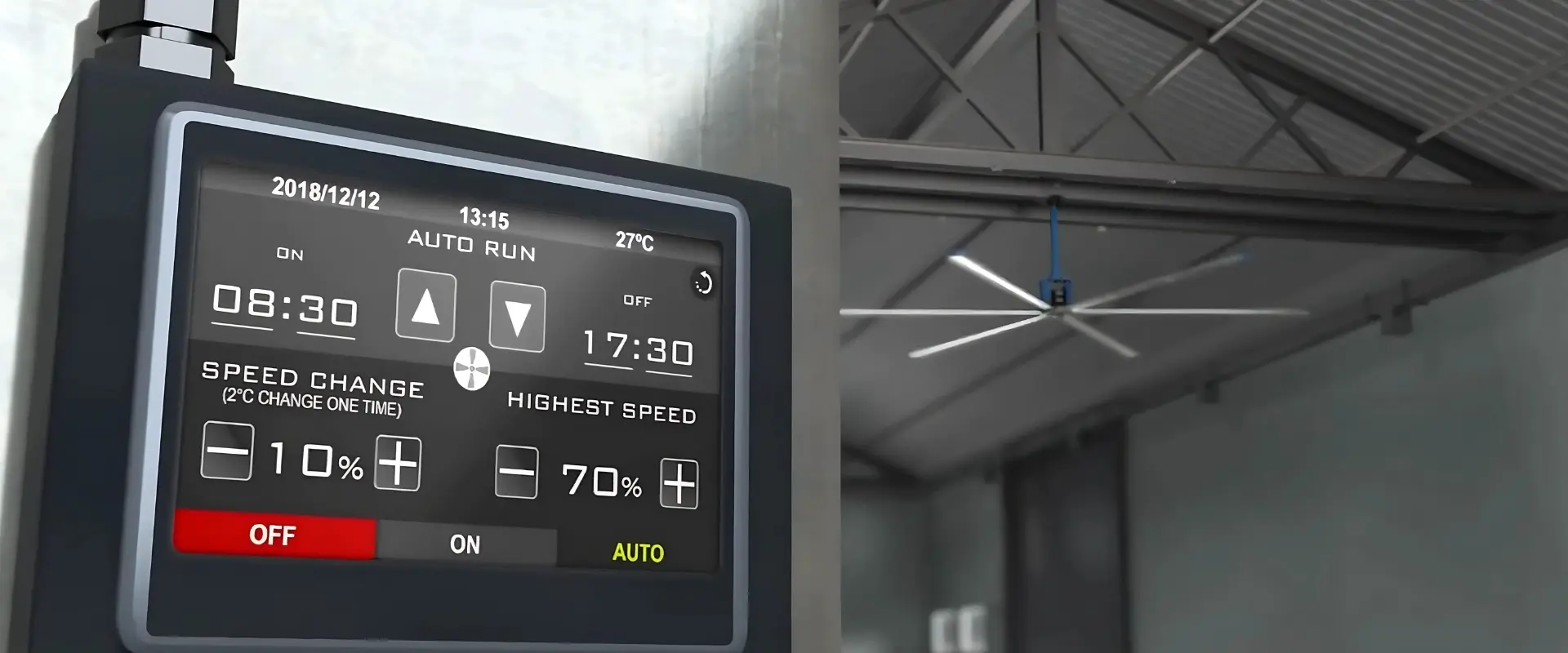
Smart Monitor · All Models
Smart Dashboard
Monitor energy, temperature, alerts, and AI performance across all connected HVLS systems in real time.
Taiwan HVLS Fan Line
SUNON & Powersky Taiwan Series
Next-generation energy-saving BLDC technology – manufactured in Taiwan, CE certified, OLED display, digital control. Diameter from 1.5m to 7.3m.
Manufactured in Taiwan · SUNON & AeropowerSUNON Series 10
Large-diameter HVLS from Taiwan – high-efficiency BLDC IE4 motor, 40% lower power consumption than standard motors. Digital control with integrated OLED display.
View Details →SUNON Series 3
Mid-size version – optimised for small and medium workshops, schools, churches, studios. Quiet operation, minimal maintenance, simple installation.
View Details →SUNON Series 1
Large BLDC ceiling fan – cooling solution for showrooms, restaurants, cafés and shopping centres. Modern design, quiet operation, outstanding energy savings.
View Details →Powersky X6
Powersky X6 – 6-blade BLDC aluminium alloy technology, integrated OLED display, intelligent digital control. Ideal for logistics warehouses, large factories, distribution centres.
View Details →


