
✗ The Myth
Fans are summer tools — switch them off when it gets cold
✓ The Physics
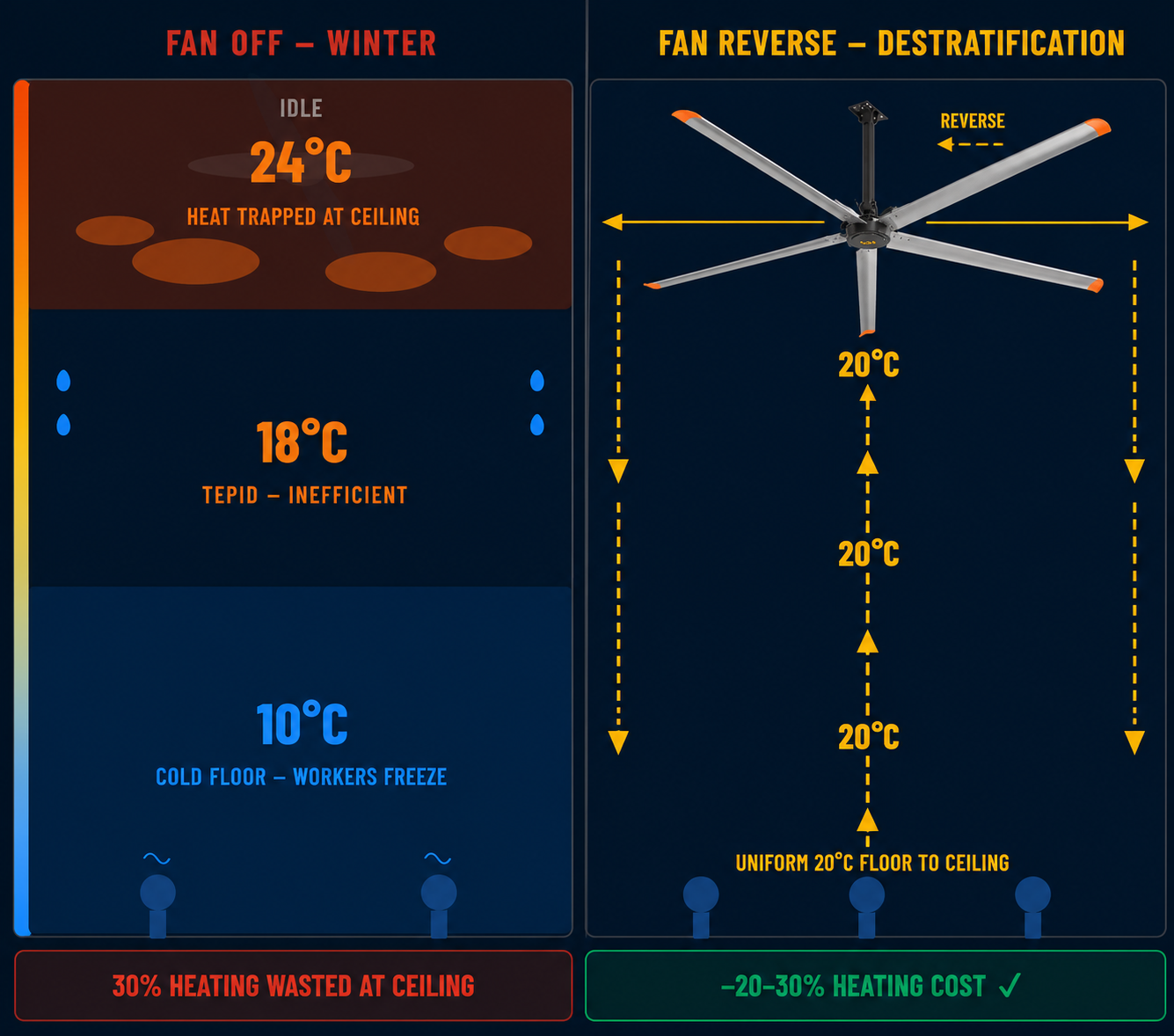
Idle fans let heat pocket at ceiling — you pay to heat air no one breathes
The Problem
What Happens When
You Turn Fans Off in Winter
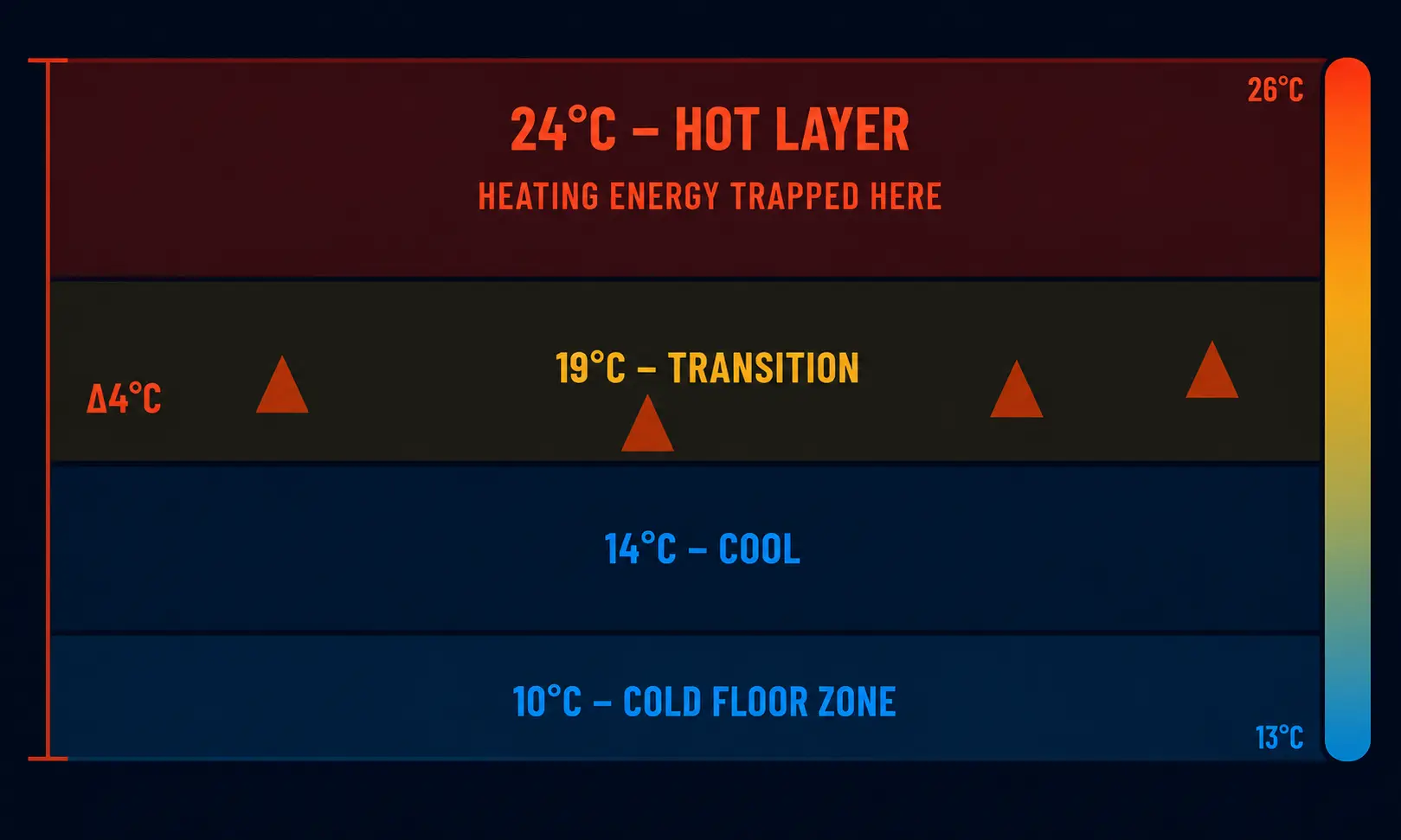
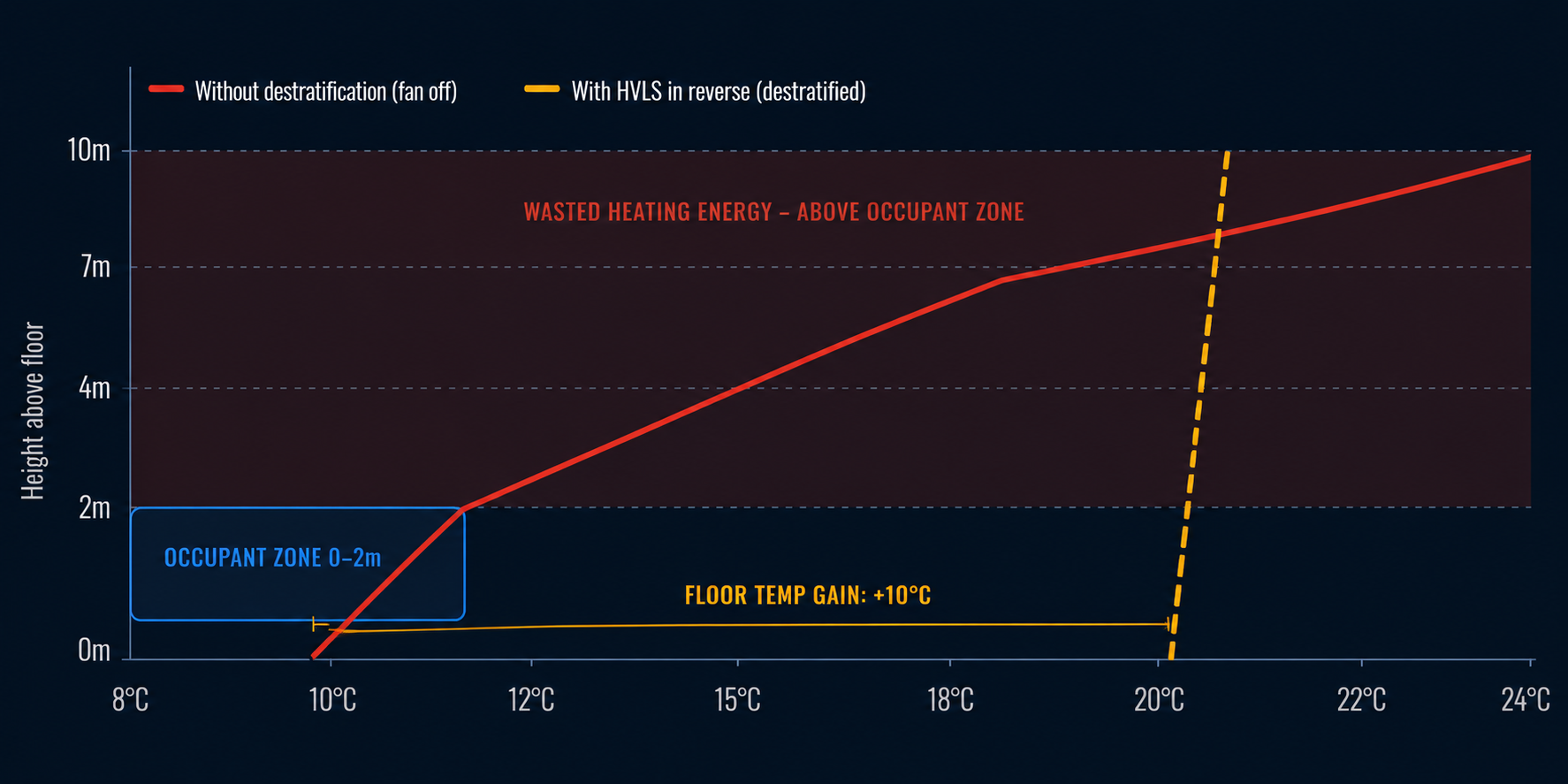
Warm air is less dense than cold air. Without forced mixing, it rises and stays at ceiling level. In a 10m facility, floor temperature can be 10–14°C colder than ceiling temperature — while you pay to heat the entire volume.
✗ Warm air rises to ceiling — you heat 10m of air height but workers occupy only the bottom 2m
✗ Floor-level temperature can be 10–14°C colder than ceiling in a typical industrial facility
✗ Heaters run longer and harder to compensate — 30% of heating energy goes to empty ceiling space
✗ Cold floor zones cause worker discomfort, slower productivity, and higher absenteeism in winter months
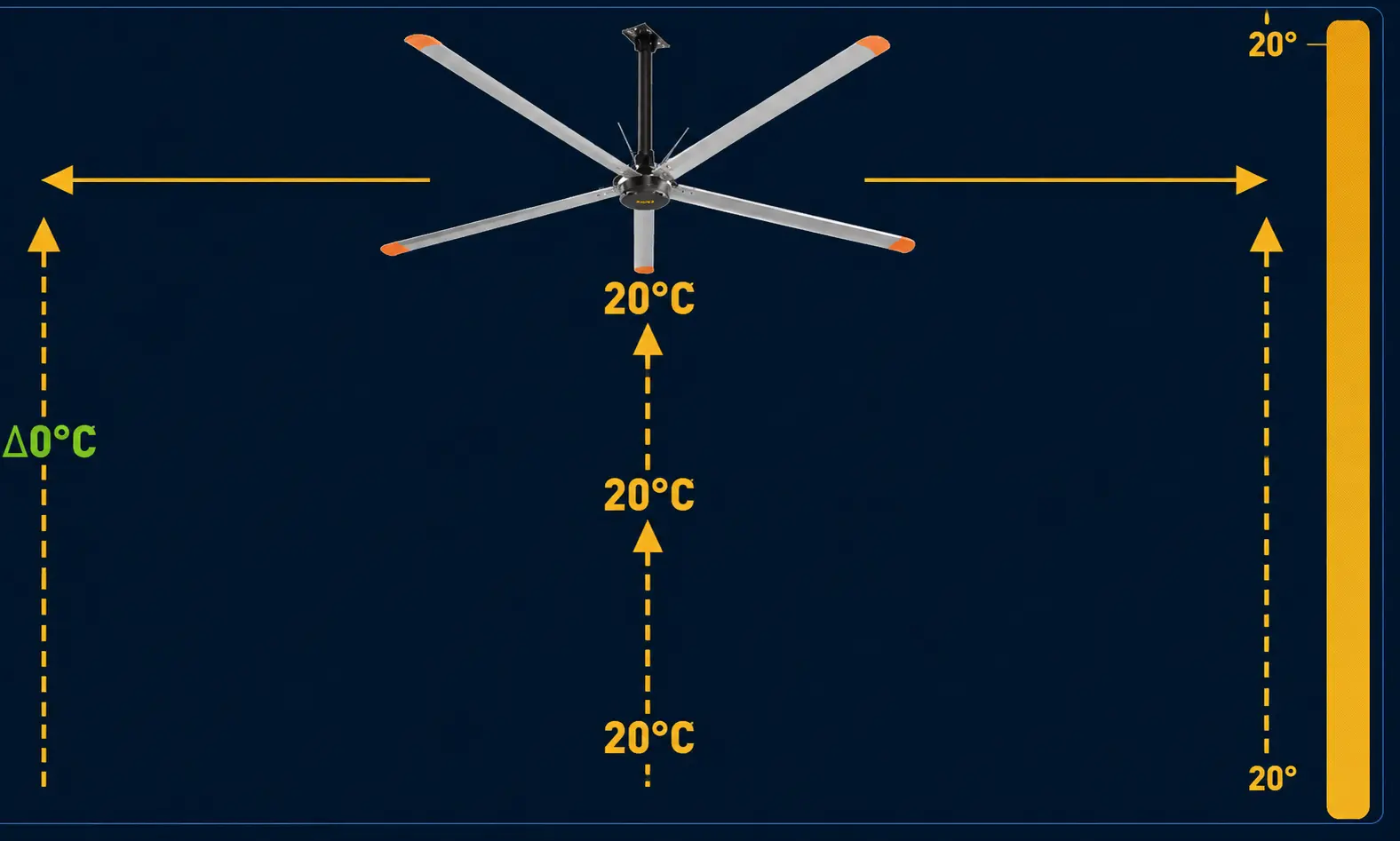
✓ Slow reverse rotation pulls warm ceiling air down gently along the walls — no draft at floor level
✓ Floor-to-ceiling temperature difference collapses to 0–2°C — every cubic metre of heated air works
✓ Heating setpoint can be lowered 2–3°C with same perceived warmth — 20–30% heating energy saving
✓ Workers at floor level receive the full benefit of every joule of heating energy input
Temperature Profile
The 14°C Gap You’re
Currently Paying For
In a facility with 10m ceiling and conventional heating with no airflow mixing, here is how temperature distributes from floor to ceiling — and what destratification achieves.
Winter Consequences
Two Problems That
Idle Winter Fans Create
Thermal stratification is not just about worker comfort. It causes measurable structural, operational, and financial damage to facilities every winter.
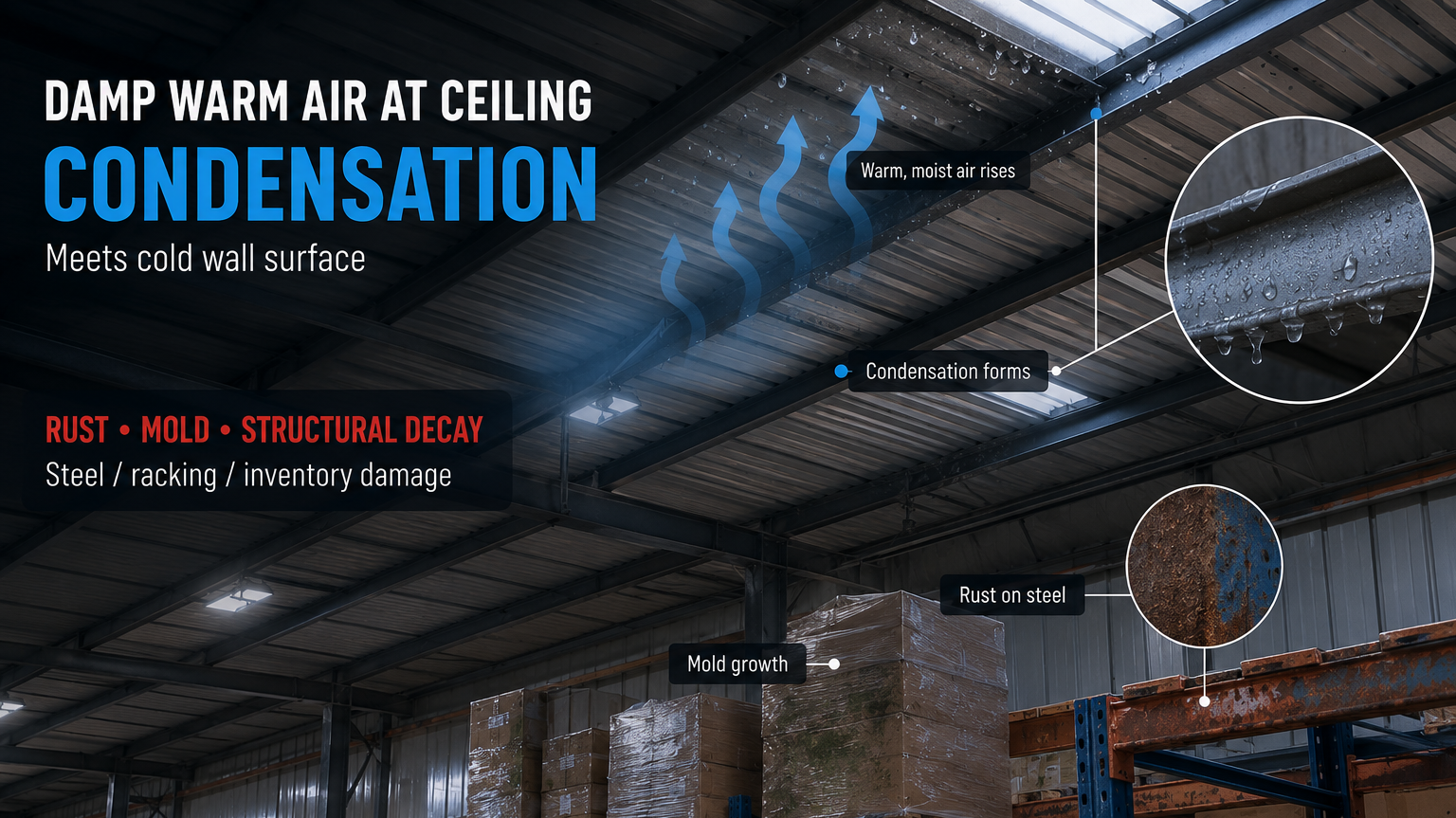
CONDENSATION & CORROSION
Warm humid air condenses on cold surfaces, causing rust, mould, product damage, and gradual structural deterioration.
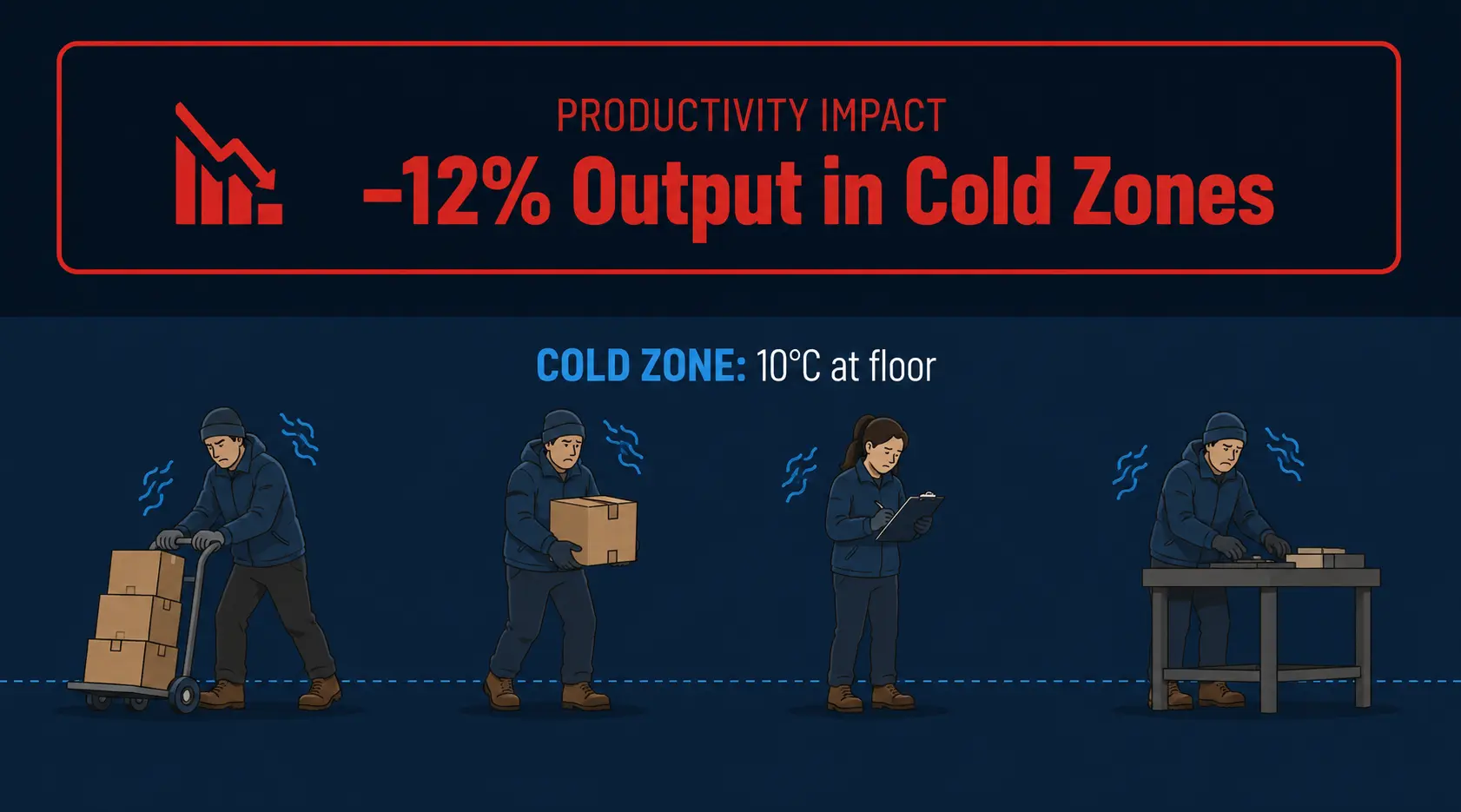
COLD FLOOR ZONES & LOST PRODUCTIVITY
Cold floors reduce worker comfort, leading to 10–15% lower productivity, more errors, and increased absenteeism.
The Solution
Summer vs Winter Mode:
One Switch, Year-Round Value
Every Hamilton Air HVLS fan ships with a mode switch on the VFD controller. One setting for summer cooling, one for winter destratification. The physics of each mode is fundamentally different.
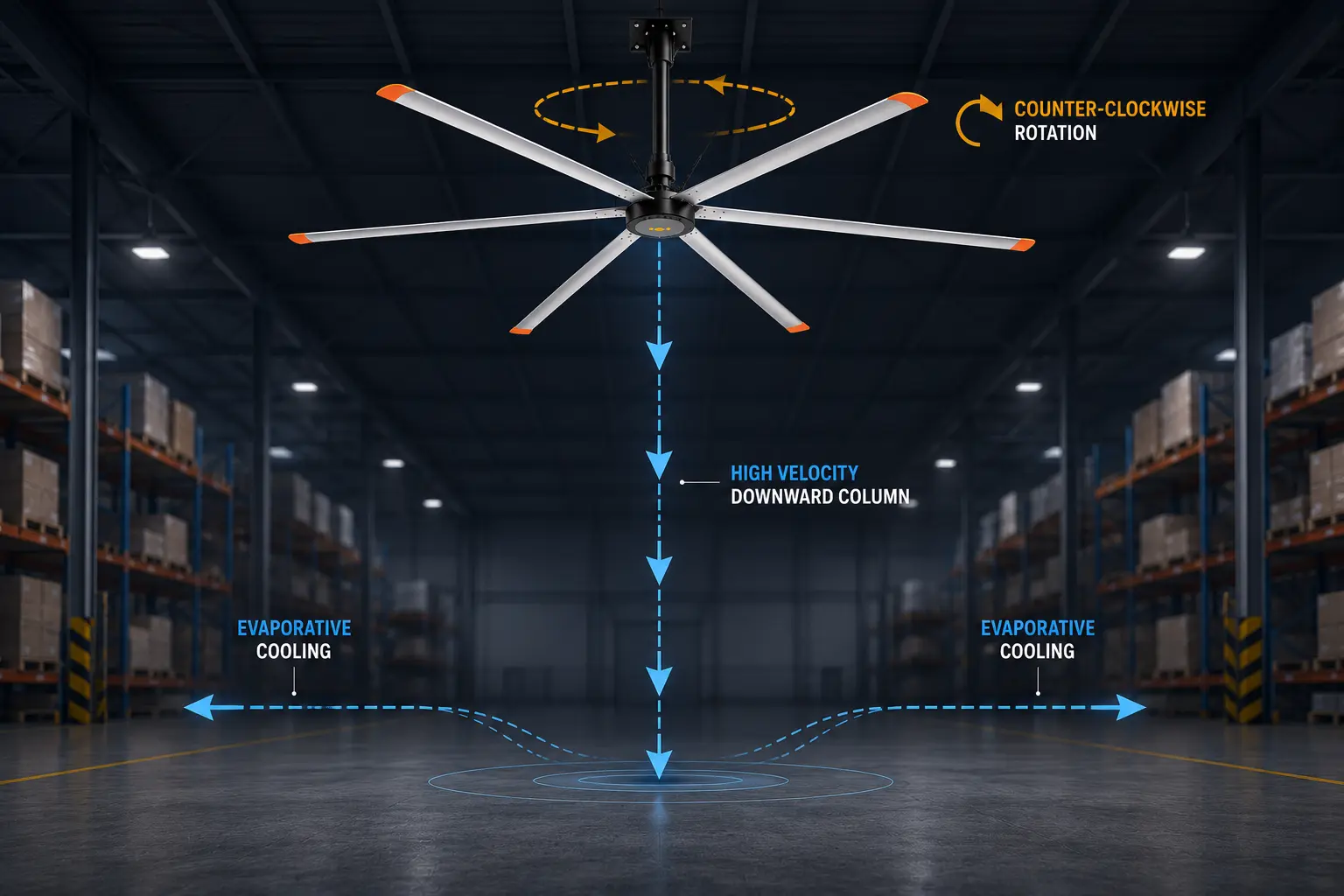
Summer Mode
Counter-Clockwise — Cooling
Counter-clockwise rotation creates a powerful downward airflow, delivering a 6–8°C perceived cooling effect through faster evaporation.
Speed: 50–75% RPM for effective cooling in 30–38°C conditions.
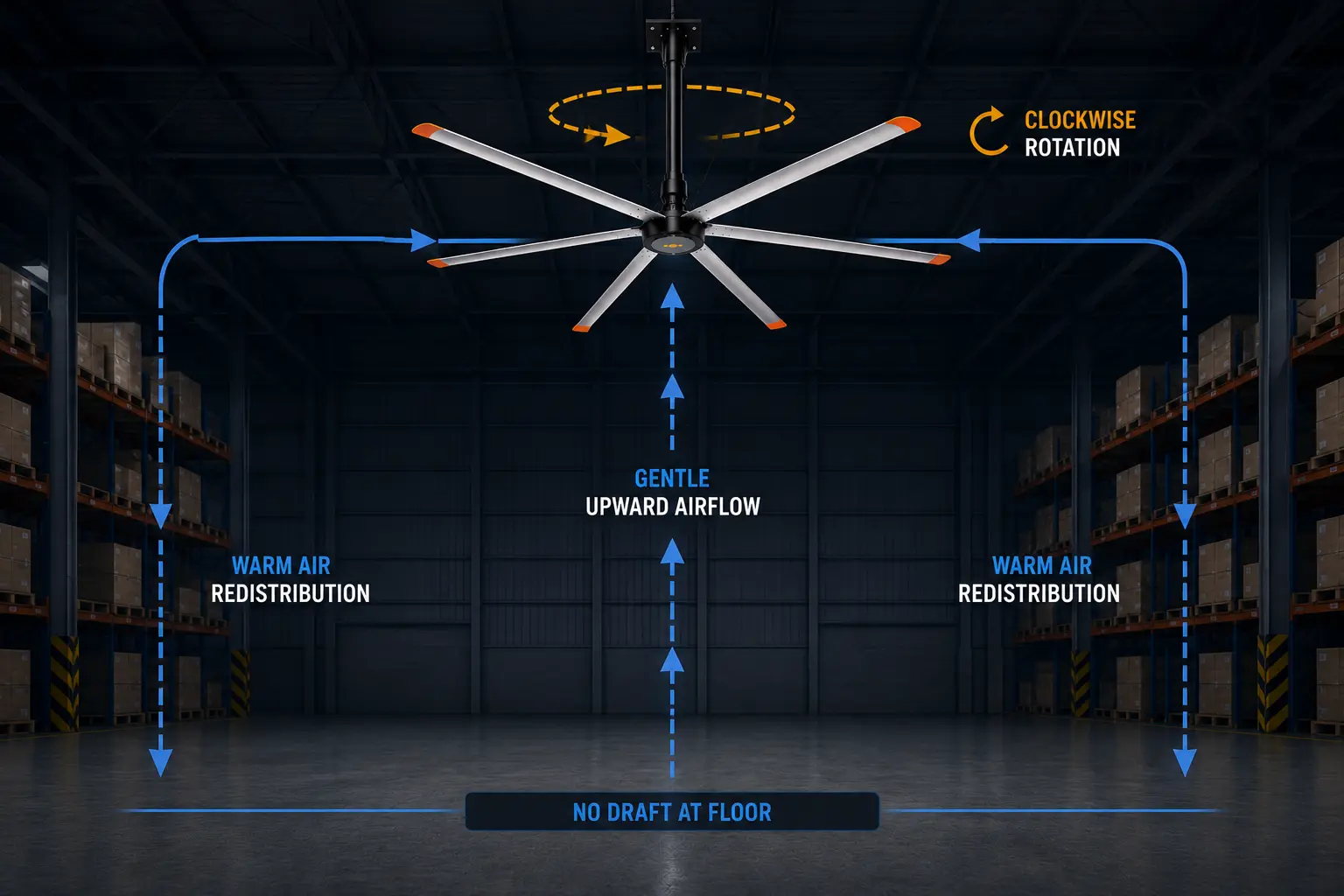
Winter Mode
Clockwise — Destratification
Clockwise rotation gently mixes warm ceiling air without creating drafts, maintaining a more even indoor temperature.
Speed: 10–25% RPM for gentle air mixing with minimal floor-level airflow.
Year-Round Value
Winter Operation Delivers
Its Own ROI
HVLS fans that sit idle in winter are leaving money on the table. These numbers are measured from Hamilton Air installations running year-round destratification programmes.
30%
Heating energy saved by eliminating thermal stratification in 10m+ facilities
100%
Condensation elimination on steel structures when air mixing is maintained
0.1 kW
Typical power draw of HVLS in winter reverse mode — barely more than a table fan
14°C
Maximum floor-to-ceiling temperature differential eliminated by destratification
Our most selected products at Hamilton Air
Each model selected on four criteria: design, performance, durability and suitability for Vietnam's climate.
Minimalist Scandinavian wood blade fan — the #1 architect's choice for villas and premium apartments.
Energy-saving integrated LED ceiling fan — the optimal 2-in-1 solution for living rooms, restaurants and cafés.
Aerodynamic aluminium blades for premium commercial spaces, showrooms and hotel lobbies.
Large HVLS ceiling fan for commercial spaces. Strong airflow and quiet operation, ideal for resorts and garden restaurants.
Premium heritage-style wood blades — an interior statement piece for villa living rooms and European-style restaurants.
The most premium large-blade commercial fan — wide coverage, luxury design, BMS-ready with smart control.
Bắt đầu viết ở đây...